
By Lara Kajs
Thinking Out Loud
This piece examines the ongoing persecution and displacement of the Rohingya through the lens of international humanitarian and human rights law. Kajs highlights the failures of regional and global responses, emphasizing the legal and moral obligations of states to protect displaced populations. The article underscores the broader implications of statelessness, forced migration, and collective inaction in the face of sustained human rights violations.
In the past six weeks, nearly 500 Rohingya have fled Myanmar—or the countries that temporarily host them—taking to the sea in search of a life free from persecution.
Nearly 200 Rohingya refugees were left adrift for weeks in the Bay of Bengal after their boat’s engine failed. They were fleeing systemic persecution, searching for safety, education, and the means to support their families. Stranded without food or fresh water, many became severely ill. Some resorted to drinking seawater. More than twenty people died before rescue came.
In the Name of Humanity
Aid agencies and the United Nations issued repeated appeals for regional governments to intervene in the name of humanity. For weeks, those appeals went unanswered. On 26 December, 185 surviving Rohingya men, women, and children were finally rescued and brought ashore in Sumatra, Indonesia.
Others were not as fortunate. A separate vessel carrying 180 Rohingya refugees sank at sea; no survivors have been found.
In early December, a Vietnamese oil tanker rescued 154 Rohingya, only to return them to Myanmar authorities, where they were placed in detention and now face criminal charges for attempting to flee. Days later, the Sri Lankan Navy rescued 104 Rohingya—most of them unaccompanied children—and similarly placed them in detention.
These incidents are not isolated. They reflect a recurring pattern: those fleeing persecution are met not with protection, but with punishment.
A Stateless People
The Rohingya are widely regarded as one of the most persecuted populations in the world. Despite generations of residence in Myanmar, they are denied citizenship and legal recognition. Statelessness strips them of basic rights, including access to education, healthcare, and freedom of movement. Even their identity has been systematically erased—at times, the use of the name “Rohingya” itself has been prohibited.
Faced with these conditions, the decision to flee is not difficult to understand. It is an act of desperation shaped by the absence of viable alternatives.
Statelessness strips the Rohingya of rights, identity, and the ability to live with dignity.”
Deteriorating Humanitarian Conditions
More than 150,000 Rohingya remain confined in camps in Myanmar’s Rakhine State. Since the February 2021 military coup, conditions have deteriorated further, with widespread human rights violations that may amount to crimes against humanity and war crimes.
Many who attempt to flee originate from refugee camps in Bangladesh, where over one million Rohingya have sought refuge since the 2017 military crackdown—an operation the United Nations has described as ethnic cleansing. While Bangladesh has provided critical refuge, conditions in Cox’s Bazar remain severe, with overcrowding, insecurity, and persistent reports of violence, particularly against women and girls.
Global Responsibility
The protection of refugees cannot rest on a single state. It is a shared international responsibility. Yet time and again, states fail to respond collectively or consistently to those fleeing conflict and persecution.
A more effective response requires coordinated international action: expanding resettlement pathways, ensuring humane treatment of those rescued at sea, and applying sustained diplomatic and economic pressure on governments that systematically persecute minority populations.
The Rohingya are not leaving by choice. They are leaving because the conditions imposed upon them leave no alternative.
In the name of humanity—and in accordance with international law—the international community must do more to ensure their protection, their inclusion, and ultimately, their right to live without the fear of persecution.
Published 2 January 2023
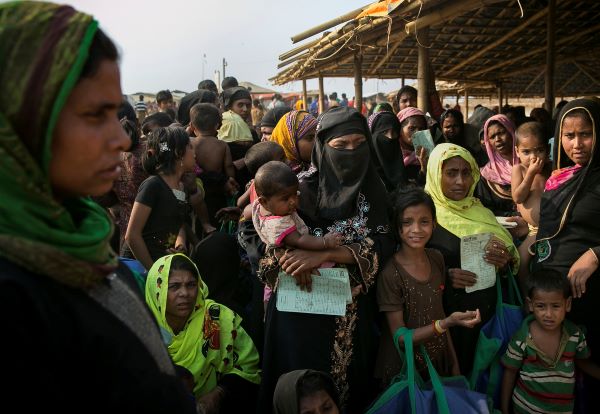
Photo Credit: Bangladesh – Rohingya women in refugee camps share stories of loss and hopes of recovery by UN Women Gallery. Licensed under CC by NC-ND 2.0
About Thinking Out Loud
Thinking Out Loud is a commentary series by Lara Kajs examining international law, humanitarian crises, and the prevention of mass atrocities. Drawing on field experience in conflict and displacement settings, the column explores the legal and policy challenges that shape contemporary conflicts
About the Author
Lara Kajs is the founder and executive director of The Genocide Report, a Washington, DC-based educational nonprofit focused on atrocity prevention and international law. She is the author of several field-based books on conflict, displacement, humanitarian crises, and international humanitarian law, drawing on extensive research and field experience in Yemen, Syria, and Afghanistan. Her writing and public speaking focus on atrocity crimes, forced displacement, the protection of civilians, and the legal frameworks governing armed conflict.