
By Lara Kajs
Thinking Out Loud
This piece interrogates the limits of global accountability in upholding International Humanitarian Law. Kajs draws lessons from historical atrocities, ongoing conflicts, and Russia’s invasion of Ukraine to explore both moral and legal responsibilities. The article challenges governments, institutions, and citizens to consider how far they will go to prevent and respond to mass human suffering.
Doing the right thing is never wrong, but it often requires courage, integrity, and sacrifice. A central question in my work has become: how far will we go to ensure that International Humanitarian Law (IHL) is respected and civilians are protected during conflict? How many atrocities must occur before human suffering outweighs political caution or fear of offending powerful states?
Reflection on Remembrance
My birthday, 27 January, coincides with International Holocaust Remembrance Day, marking the liberation of Auschwitz-Birkenau in 1945. Each year, while reflecting on my own life, I am reminded of millions who perished under systems of hatred and oppression. Holocaust remembrance challenges us to confront intolerance, hatred, and the consequences of allowing some to destroy others systematically. It asks us to consider: how far will we go to keep the promise of “Never Again”?
The World Fails to Learn
Since Auschwitz, humanity has witnessed repeated atrocities:
Cambodia under the Khmer Rouge: nearly three million killed.
Darfur: more than 500,000 dead since 2003.
Bosnia: nearly 100,000 killed, including 8,000 in Srebrenica.
Rwanda: 800,000 Tutsi, Twa, and moderate Hutu massacred in 100 days.
Yet despite repeated vows of “Never Again,” violence continues. The Rohingya in Myanmar face ongoing persecution. Syria, Yemen, Iraq, and Afghanistan remain defined by sustained conflict. Today, global displacement exceeds 100 million people.
Since Auschwitz, the world has repeatedly failed to prevent mass atrocities, despite vows of ‘Never Again.’”
Unprovoked Invasion: Ukraine
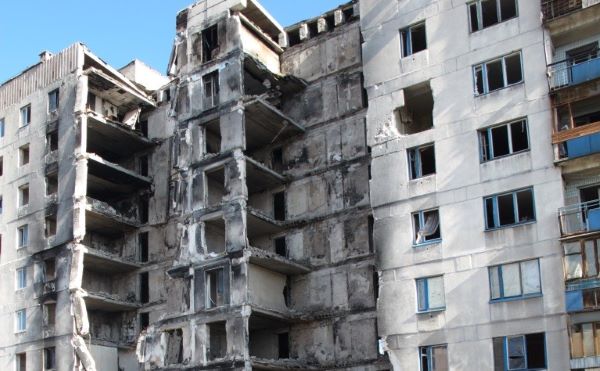
Russia’s invasion of Ukraine demonstrates how quickly international norms can be disregarded. On 14 January, Russian airstrikes destroyed a nine-story apartment building in Dnipro, killing 45 people, seriously injuring 80, and leaving 11 unaccounted for. Among the victims were a pregnant woman and her husband, found together in a final act of protection.
How far will the international community go to protect humanity from leaders who commit crimes with impunity?
Shaking Hands With Hatred
History reflects repeated missed opportunities to act. In 2012, the Obama administration drew a “red line” against the use of chemical weapons in Syria. When that line was crossed—through the use of sarin gas and chlorine barrel bombs against civilians—it was not enforced. The failure to respond undermined a clear prohibition under international law.
In 2019, Congress moved to block U.S. arms sales to Saudi Arabia following repeated strikes on civilian targets in Yemen, including the bombing of a school bus. The legislation was vetoed by the Trump administration, allowing those transfers to continue despite well-documented violations of International Humanitarian Law.
These are not isolated incidents. They reflect a consistent pattern in which enforcement of legal norms is subordinated to political calculation—at significant human cost.
Courage, Integrity, and Sacrifice in Ukraine
Following Russia’s 2022 invasion, Ukrainian President Volodymyr Zelensky repeatedly requested aid. While millions of civilians fled, women prepared to fight with improvised weapons, and Ukrainian forces resisted with determination, assistance from foreign governments was delayed. Fear of escalation and perception of threatening Russia slowed critical support.
Even as the EU and UN member states eventually provided military and humanitarian aid, Russia continued targeting civilian communities. Its status as a permanent UN Security Council member does not grant immunity from accountability for violating IHL.
Holding Leaders Accountable
Every example cited here constitutes a violation of International Humanitarian Law, which safeguards civilians and limits the means of warfare. Enforcement can occur at both domestic and international levels, through courts, tribunals, and the International Criminal Court (ICC) in The Hague. Yet the real question remains: how far will we go to hold perpetrators accountable? The world can do better—and must.
Published 5 February 2023
Photo Credit: “Ukraine: IDPs daily struggle in Eastern Ukraine by EU Civil Protection and Humanitarian Aid is licensed under CC ND 2.0.
About Thinking Out Loud
Thinking Out Loud is a commentary series by Lara Kajs examining international law, humanitarian crises, and the prevention of mass atrocities. Drawing on field experience in conflict and displacement settings, the column explores the legal and policy challenges that shape contemporary conflicts
About the Author
Lara Kajs is the founder and executive director of The Genocide Report, a Washington, DC-based educational nonprofit focused on atrocity prevention and international law. She is the author of several field-based books on conflict, displacement, humanitarian crises, and international humanitarian law, drawing on extensive research and field experience in Yemen, Syria, and Afghanistan. Her writing and public speaking focus on atrocity crimes, forced displacement, the protection of civilians, and the legal frameworks governing armed conflict.