
Lara Kajs
Thinking Out Loud
This piece provides firsthand reporting from Gaza during the early weeks of the October 2023 conflict, highlighting the scale of civilian casualties, displacement, and humanitarian disruption. It explores the legal, moral, and strategic implications of the war, emphasizing the need for accountability and aid.
In the first 24 days of war between Israel and Hamas, Gaza’s humanitarian crisis has reached catastrophic levels. There is no food, no clean water, no medical supplies, and no fuel. Six hospitals have been forced to close due to fuel scarcity. More than 8,000 Palestinian civilians have been killed, nearly 40 percent of them children—approximately 3,600 lives lost. On average, a child dies every eight minutes, with the UN reporting 492 children killed or severely injured daily. At least 1.4 million people have been internally displaced, and nearly 600,000 are sheltering in UNRWA refugee camps. Most recently, the IDF targeted the Jabalya refugee camp, a UNRWA site.
Two Paths: Stability or Chaos
The Middle East stands at a crossroads. One path leads toward stability, cooperation, and peace; the other is defined by chaos, conflict, and punitive violence. Hamas launched a brutal attack against Israel on 7 October, and Israel responded with a devastating air campaign. Both sides have inflicted massive suffering on civilian populations, with the Geneva Conventions increasingly disregarded.
Supernova – Day of Terror
On 7 October, the Supernova Music Festival in the Negev Desert, near the Gaza border, became a site of terror. Hamas militants killed 260 festival-goers and took at least 150 hostages. In border communities, homes were burned, property looted, and an estimated 1,000 civilians murdered, many of them children.
Family accounts indicate hostages include infants, the elderly, individuals with disabilities, and multi-national citizens. The International Committee of the Red Cross (ICRC) has urged Hamas to allow wellness checks, access to life-saving medications, and communication between hostages and families.
Israel’s Retaliation and Civilian Harm
Israel is entitled to self-defense, yet its response has resulted in widespread civilian casualties and destruction. Hospitals, schools, mosques, residential towers, and markets have been struck, leaving over 200,000 people homeless. Satellite imagery suggests that 61 percent of Gaza’s buildings have been damaged or destroyed.
The ongoing ground siege threatens massive additional casualties, which Israel has deemed “acceptable,” raising serious concerns under international humanitarian law (IHL).
International Humanitarian Law Challenges
Israel issued warnings for civilians and multinationals to evacuate northern Gaza, but the reality of displacement is complex. Vulnerable populations—including those in hospitals, the disabled, and the elderly—cannot leave safely. Meanwhile, US diplomatic efforts, led by Secretary of State Antony Blinken, arranged a limited evacuation for multinationals, yet IDF airstrikes have blocked exit routes and delayed humanitarian aid.
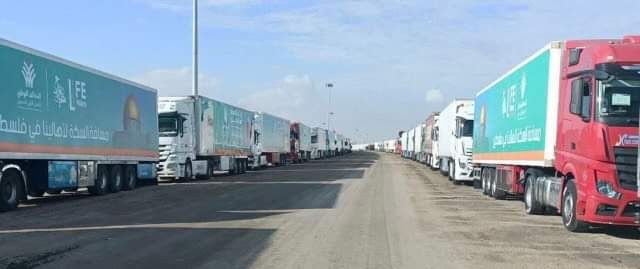
More than 200 semi-trucks carrying food, medical supplies, and fuel remain stalled on the Egyptian side of the Rafah border crossing. Only 97 trucks have crossed, and no fuel has been delivered. The UN estimates 100 trucks per day are required to address the humanitarian crisis.
Voices from the Ground
Jason Nazari, Director of Security and Logistics at TGR’s Middle East office, is stationed in Khan Younis refugee camp. He reports that “overwhelming need” is an understatement. Survivors face indiscriminate strikes, and civilian life is largely unprotected. While Hamas operates as a militant organization, Israel’s air and ground campaigns have demonstrated little attempt to minimize civilian harm.
Fate of Palestinians
Palestinians in Gaza are trapped between a blockade and ongoing military operations. Expansion of Israeli settlements in the West Bank and East Jerusalem has further restricted movement. Observers fear Israel may attempt to displace Gaza’s population entirely. Regional actors—including Egypt and Jordan—have warned against transferring this humanitarian crisis onto neighboring states.
The removal of Hamas from power is widely recognized as necessary for peace, yet continued bombardment of civilians risks eroding international sympathy and undermining moral authority.
Palestinians in Gaza are trapped between a blockade and ongoing military operations. Expansion of Israeli settlements in the West Bank and East Jerusalem has further restricted movement.”
Accountability and the International Criminal Court
On 13 October, ICC Chief Prosecutor Karim Khan confirmed that the court has jurisdiction to investigate potential war crimes in Gaza. Accountability must apply equally: Israel, like other states or actors accused of targeting civilians, must be held to the same legal standards. Impunity only perpetuates conflict.
Standing with Israel does not preclude condemning unlawful attacks on civilians or supporting humanitarian access. Humanity and law must remain guiding principles.
Published: 31 October 2023
Photo Credit
TGR Photo: aid trucks wait at the Rahah Border Crossing on the Gaza – Egypt border, 22 October 2023.
About Thinking Out Loud
Thinking Out Loud is a commentary series by Lara Kajs examining international law, humanitarian crises, and the prevention of mass atrocities. Drawing on field experience in conflict and displacement settings, the column explores the legal and policy challenges that shape contemporary conflicts
About the Author
Lara Kajs is the founder and executive director of The Genocide Report, a Washington, DC-based educational nonprofit focused on atrocity prevention and international law. She is the author of several field-based books on conflict, displacement, humanitarian crises, and international humanitarian law, drawing on extensive research and field experience in Yemen, Syria, and Afghanistan. Her writing and public speaking focus on atrocity crimes, forced displacement, the protection of civilians, and the legal frameworks governing armed conflict.