
By Lara Kajs
Thinking Out Loud
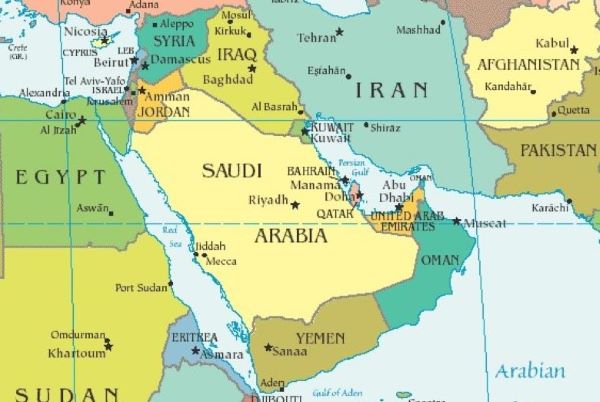
As conflict in Gaza expands beyond its immediate borders, the risk of a wider regional war is no longer theoretical. From Yemen to Syria, and across Iraq, Lebanon, and the Red Sea, interconnected actors and long-standing conflicts are converging. Understanding these dynamics is critical to assessing whether the current crisis can be contained—or whether it is already evolving into a broader regional confrontation.
Yemen has been locked in a brutal conflict since 2014. Divided between Houthi control in the north and the internationally recognized government in the south, the war has been further shaped by external actors, including Iran, Saudi Arabia, and a coalition of regional partners. Similarly, Syria has been engulfed in civil war since 2011, resulting in hundreds of thousands of deaths and one of the largest displacement crises in modern history.
For years, these conflicts remained largely contained within their respective borders. However, as Israel’s war in Gaza expands in scope and as external actors—including the United States and the United Kingdom—become increasingly involved, concerns have intensified that these interconnected crises may evolve into a broader regional conflict.
Yemen’s Conflict
Yemen’s conflict escalated in 2014 when Houthi forces seized control of Sana’a, the capital, following protests over economic conditions and political grievances. The group—formally known as Ansar Allah—emerged from northern Yemen with roots in the Zaydi Shi’a community and a long-standing opposition to the central government.
After failed negotiations, Houthi forces placed then-President Abdrabbuh Mansour Hadi under pressure, eventually forcing his government to resign. Hadi later fled to Saudi Arabia, where he remained for much of his presidency, governing largely from exile until his resignation in 2022.
In March 2015, a Saudi-led coalition launched a military intervention aimed at restoring the Yemeni government. The campaign included extensive airstrikes and blockades, with support from the United States and the United Kingdom in the form of arms transfers, intelligence sharing, and logistical assistance.
All parties to the conflict have faced credible allegations of violations of international humanitarian law.
Humanitarian Cost
The humanitarian consequences of the war in Yemen have been catastrophic. Estimates suggest that hundreds of thousands of people have died, many from indirect causes such as hunger, disease, and lack of access to healthcare.
Roughly two-thirds of the population—more than 20 million people—require humanitarian assistance, including millions of children. Large segments of the population remain at risk of famine, while recurrent cholera outbreaks and economic collapse have further compounded the crisis. Millions have been internally displaced.
Yemen’s economic fragmentation, particularly since 2019, has deepened these challenges, limiting access to basic goods and eroding already fragile living conditions.
US Presence in Yemen
The United States has maintained a counterterrorism focus in Yemen for decades, particularly against Al-Qaeda in the Arabian Peninsula (AQAP). Military operations have included drone strikes and special operations missions targeting extremist groups.
These operations, however, have not been without controversy. Civilian casualties linked to U.S. strikes—including incidents involving wedding parties and local communities—have drawn criticism from human rights organizations and raised ongoing concerns about accountability and targeting practices.
The Houthis
The Houthis have historically operated as a localized insurgent movement with national objectives, though their role has evolved significantly over the course of the conflict.
While Iran has provided varying levels of support—including weapons, training, and technical assistance—the relationship is often overstated in policy discourse. The Houthis are not simply a proxy force; they retain agency in their strategic decision-making and have, at times, acted independently of Iranian preferences.
More recently, Houthi forces have expanded their operational reach, launching missile and drone attacks toward Israel and targeting commercial shipping in the Red Sea. Houthi leadership has framed these actions as support for Palestinians in Gaza.
These developments have prompted military responses from the United States and the United Kingdom, which have conducted strikes against Houthi targets, citing the need to protect international shipping routes and regional stability.
Regional Threat
Beyond Yemen, the risk of escalation is visible across multiple fronts.
Armed groups in Iraq and Syria—some operating under the umbrella of what is often referred to as Iran’s “axis of resistance”—have carried out attacks on U.S. military positions. These networks include a range of state-aligned and non-state actors with varying degrees of coordination and autonomy.
In response, the United States has conducted retaliatory strikes against facilities linked to these groups, particularly those associated with Iran’s Islamic Revolutionary Guard Corps.
The conflict has also expanded geographically. Hostilities between Israel and Hamas in Gaza have spilled over into Lebanon, with Hezbollah engaging Israeli forces along the northern border. Meanwhile, attacks on U.S. personnel in Iraq, Syria, and Jordan have further widened the scope of confrontation.
A January drone strike on a U.S. installation in Jordan, which killed three American servicemembers, underscored the risks of continued escalation and drew a direct U.S. commitment to respond.
The Bottom Line
What began as a series of interconnected but largely contained conflicts is increasingly converging into a broader regional confrontation.
The involvement of multiple state and non-state actors, the expansion of hostilities across borders, and the growing frequency of retaliatory strikes all point to a shifting landscape. The question is no longer whether regional escalation is possible, but whether it is already underway—and how far it may extend.
Photo Credit: Middle East-map by amystatton. Licensed under CC by 2.0
Published 1 February 2024
About Thinking Out Loud
Thinking Out Loud is a commentary series by Lara Kajs examining international law, humanitarian crises, and the prevention of mass atrocities. Drawing on field experience in conflict and displacement settings, the column explores the legal and policy challenges that shape contemporary conflicts.
Lara Kajs is the founder and executive director of The Genocide Report, a Washington, DC-based educational nonprofit focused on atrocity prevention and international law. She is the author of several field-based books on conflict, displacement, humanitarian crises, and international humanitarian law, drawing on extensive research and field experience in Yemen, Syria, and Afghanistan. Her writing and public speaking focus on atrocity crimes, forced displacement, the protection of civilians, and the legal frameworks governing armed conflict.