Lara Kajs
Thinking Out Loud
The escalation between Israel and Hezbollah along Lebanon’s southern border reflects a broader transformation in the regional security landscape—one in which sustained violence no longer guarantees sustained attention. What would once have been treated as a major international crisis is increasingly absorbed into a crowded and fragmented global narrative. Yet the implications of escalation in Lebanon extend well beyond the immediate geographic area, carrying significant risks for regional stability, civilian protection, and the durability of international legal norms.
This is not simply a story about cross-border hostilities. It is a case study in how prolonged conflict environments become normalized within international discourse—and what is lost when they do.
Escalation Without Visibility
The exchanges of fire between Israel and Hezbollah are not isolated incidents. They represent a sustained pattern of military engagement that has intensified in frequency, scope, and geographical reach. Airstrikes, rocket fire, and artillery exchanges have expanded beyond immediate border zones, increasingly affecting civilian-populated areas in southern Lebanon and northern Israel.
At the same time, the threshold for what constitutes “major escalation” appears to have shifted. Events that would previously have triggered urgent diplomatic intervention are now more likely to be framed as part of an ongoing cycle rather than a distinct crisis requiring immediate response.
Visibility is not neutral—it shapes which crises receive response and which are allowed to persist without consequences.”
This normalization has consequences. When escalation is perceived as routine, it risks diminishing the urgency of international engagement. Civilian harm becomes one data point among many rather than a catalyst for action. The language of crisis is replaced by the language of management.
Lebanon’s internal fragility compounds this dynamic. Years of economic collapse, political paralysis, and institutional erosion have significantly reduced the state’s capacity to absorb external shocks. In this context, even limited military escalation carries disproportionate consequences for civilian populations already living within conditions of structural vulnerability.
Civilian Risk in a Multi-Front Environment
The risks to civilians in southern Lebanon are not hypothetical. They are immediate, cumulative, and shaped by the interaction between military operations and existing humanitarian fragility.
Displacement patterns are already emerging, with families relocating away from border areas in anticipation of further escalation. Infrastructure damage—whether from direct strikes or the secondary effects of conflict—has implications for access to electricity, water, and healthcare. These pressures are not occurring in isolation; they are layered onto a national system that has been under sustained strain for years.
The presence of armed actors operating within or near civilian-populated areas further complicates the protection environment. The proximity of military objectives to civilian infrastructure increases the risk of incidental harm, while also raising legal and ethical questions regarding the conduct of hostilities.
This is not a binary situation in which responsibility can be easily assigned to one actor or another. Rather, it reflects a complex operational environment in which multiple parties’ actions contribute to heightened civilian risk. What remains constant, however, is the exposure of civilian populations to harm that they are neither responsible for nor able to mitigate.
Regional Spillover and Strategic Calculation
Escalation in Lebanon cannot be understood in isolation from the broader regional context. The conflict dynamics are deeply interconnected with developments in Gaza, Iran’s regional posture, and the strategic calculations of multiple state and non-state actors.
Hezbollah’s positioning within this landscape reflects both domestic and regional considerations. Its actions are shaped not only by immediate tactical objectives but also by its role within a broader network of alliances and deterrence strategies. Similarly, Israeli military responses are informed by assessments of both immediate threats and longer-term security concerns.
This interdependence introduces a layer of volatility that extends beyond the bilateral relationship. Actions taken in one theater may produce reactions in another, creating a feedback loop in which escalation risks are distributed across multiple fronts.
External actors also play a role in shaping these dynamics. Diplomatic alignments, security partnerships, and geopolitical interests influence both the trajectory of the conflict and the parameters of international response. In some cases, these relationships may constrain the willingness of states to apply pressure or pursue de-escalation strategies, particularly where competing priorities are at stake.
The result is a strategic environment in which escalation is both managed and perpetuated—contained enough to avoid immediate regional war, but sustained enough to produce ongoing harm.
The Normalization of Risk
Perhaps the most concerning aspect of the current moment is not escalation itself, but the degree to which it is being absorbed into the background of global awareness.
In a media environment driven by immediacy and competition, attention is a finite resource. Prolonged conflicts must compete with emerging crises, political developments, and shifting narratives. Over time, even significant escalation risks become part of the expected landscape rather than a disruption demanding response.
This normalization has implications beyond perception. It shapes policy priorities, influences diplomatic engagement, and affects the allocation of humanitarian resources. When a crisis is no longer perceived as urgent, it becomes easier to defer action, delay response, or accept incremental deterioration as inevitable.
Lebanon illustrates this dynamic with particular clarity. Despite clear indicators of escalation and civilian risk, the level of sustained international focus has not consistently matched the potential consequences of further deterioration.
Law, Accountability, and Selective Engagement
The legal framework governing armed conflict does not diminish in relevance as attention shifts. International humanitarian law continues to apply, regardless of the level of media coverage or political engagement.
Principles such as distinction, proportionality, and precaution remain central to the conduct of hostilities. Civilian populations and infrastructure are protected under these frameworks, and violations carry legal consequences. The challenge, however, lies not in the absence of law but in the uneven application of accountability mechanisms.
Where international attention is limited, the likelihood of sustained accountability efforts often diminishes. Investigations may be delayed, political will may be fragmented, and enforcement mechanisms may lack cohesion. This creates a gap between legal obligation and practical consequence.
Selective engagement further complicates this landscape. States may be more willing to pursue accountability in contexts that align with their strategic interests, while demonstrating restraint in others. This inconsistency undermines the credibility of the rules-based system and reinforces perceptions of uneven enforcement.
In Lebanon, as in other conflict settings, the durability of legal norms is closely tied to the consistency with which they are upheld. Without sustained attention and political will, even well-established legal frameworks risk becoming aspirational rather than operational.
The Bottom Line: Attention as a Strategic Variable
The situation in Lebanon is not occurring in a vacuum. It is unfolding within a global environment in which attention is uneven, priorities are contested, and response mechanisms are shaped by more than humanitarian need.
The question is not whether the risks are visible. The question is whether they are being treated with the level of urgency required to prevent further escalation.
Attention is not a passive condition. It is a strategic variable that influences how crises are understood, prioritized, and addressed. Where attention is sustained, pressure follows. Where attention fades, space opens—for escalation, for impunity, and for the gradual erosion of constraints.
Lebanon sits at the intersection of these dynamics. It is both a frontline of potential regional escalation and a case study in how ongoing crises can become normalized within international discourse.
If escalation continues without corresponding engagement, the consequences will not be limited to one border region. They will extend outward—shaping regional stability, civilian protection, and the credibility of the systems designed to prevent and respond to conflict.
When risk becomes routine, the danger is not only what happens next. It is what the world becomes willing to accept.
Published: 28 April 2026
Photo Credit
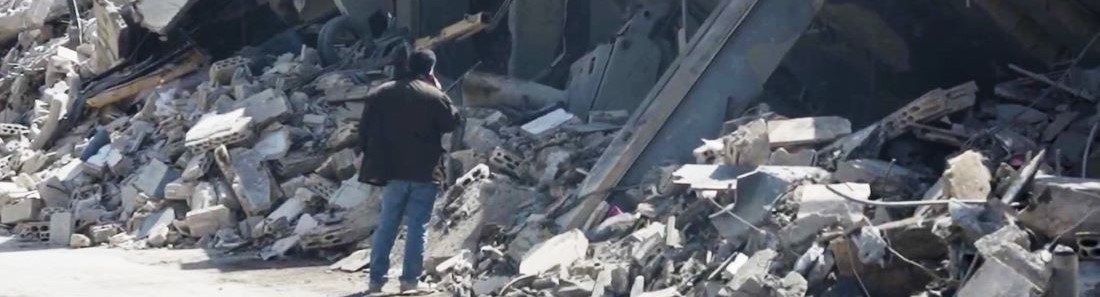
Bachoura Airstrike, Lebanon, 18 March 2026, by Megaphone. Licensed under CC BY 4.0.
About Thinking Out Loud
Thinking Out Loud is a commentary series by Lara Kajs examining international law, humanitarian crises, and the prevention of mass atrocities. Drawing on field experience in conflict and displacement settings, the column explores the legal and policy challenges that shape contemporary conflicts.
About the Author
Lara Kajs is the founder and executive director of The Genocide Report, a Washington, DC-based educational nonprofit focused on atrocity prevention and international law. She is the author of several field-based books on conflict, displacement, humanitarian crises, and international humanitarian law, drawing on extensive research and field experience in Yemen, Syria, and Afghanistan. Her writing and public speaking focus on atrocity crimes, forced displacement, the protection of civilians, and the legal frameworks governing armed conflict.