
Lara Kajs
Thinking Out Loud
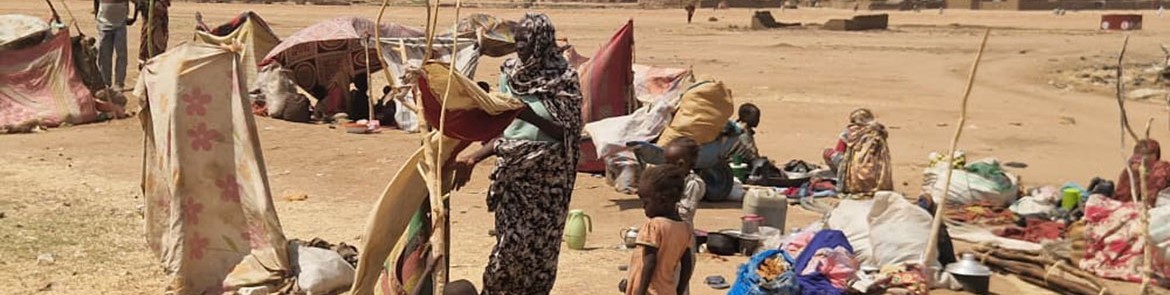
Sudan is experiencing one of the most severe humanitarian and protection crises of the present moment. Of a population of roughly 53 million people, an estimated 26 million require humanitarian assistance. More than 9 million people have been internally displaced, with an additional 4.5 million forced to flee across borders into neighboring states. Widespread displacement, fragmentation of authority, and sustained violence against civilian populations have created conditions that align with multiple established indicators of atrocity risk. Yet despite the scale and severity of the crisis, international attention has remained inconsistent.
This disconnect is not unique to Sudan. It reflects a broader pattern in which global attention is unevenly distributed across crises, often shaped less by human impact than by political relevance, media cycles, and competing geopolitical priorities.
The Hierarchy of Global Attention
Not all crises receive equal visibility. In practice, international attention operates within an implicit hierarchy shaped by strategic interests, proximity to power, and perceived geopolitical consequences.
Conflicts that intersect with the interests of major global actors tend to receive sustained coverage and diplomatic engagement. Others—particularly those without direct strategic implications for powerful states—are more likely to experience episodic attention, often triggered by moments of acute escalation rather than ongoing conditions of harm.
Sudan sits within this latter category. Despite the scale of civilian suffering and displacement, the conflict has struggled to maintain consistent visibility within international political and media agendas. This disparity does not reflect a difference in severity, but rather a difference in prioritization—an implicit hierarchy in which some crises are continuously elevated while others recede from view.
Several factors contribute to this dynamic. Conflicts tied to major power interests, longstanding rivalries, or regional security concerns are more likely to sustain attention. By contrast, crises perceived as geographically contained or politically complex often receive intermittent coverage, particularly when they lack a clear narrative framework or identifiable pathways for external intervention.
Sudan reflects many of these conditions. The fragmentation of armed actors, the multiplicity of local dynamics, and the absence of a singular diplomatic pathway have made the conflict more difficult to frame within conventional policy discourse. At the same time, competing global crises have crowded the international agenda, limiting focus despite escalating humanitarian indicators.
The consequences of this relative invisibility are not abstract. Reduced attention often corresponds with diminished diplomatic pressure, slower mobilization of humanitarian resources, and fewer accountability mechanisms. In practical terms, this creates conditions in which patterns of violence, displacement, and deprivation can persist with limited external constraint. Visibility, in this sense, is not merely a function of awareness—it is a factor that shapes response.
Visibility is not neutral—it determines which atrocities provoke response and which are allowed to continue with limited consequence.”
Recent escalations underscore the severity of the crisis. In areas such as El Fasher, reports of mass civilian casualties and large-scale destruction have emerged, reflecting patterns consistent with previous cycles of violence in Darfur. These developments, while significant in both scale and implication, have not generated the level of sustained international focus typically associated with comparable humanitarian emergencies.
Media Cycles and Structural Fatigue
Modern information environments are structured around rapid news cycles, where attention is often driven by immediacy rather than continuity. As a result, conflicts that extend over long periods without a singular defining moment are frequently deprioritized in coverage, even as conditions on the ground continue to deteriorate.
This dynamic produces a form of structural fatigue. Audiences are repeatedly exposed to overlapping global crises, while media institutions operate under constraints that favor novelty and immediacy. Over time, prolonged crises risk being absorbed into the background of global awareness, regardless of their severity.
In the case of Sudan, this has meant that escalating conditions on the ground are not consistently matched by international focus. Coverage tends to surge during moments of acute escalation and then recede, even when underlying conditions remain unchanged or worsen.
When Violence Occurs Off-Radar
The absence of sustained visibility has direct consequences for civilian protection. Where attention is limited or intermittent, political pressure on state and non-state actors often diminishes accordingly. This creates an environment in which violations of international norms may continue with reduced scrutiny and limited accountability.
In such contexts, the risk is not only that atrocities occur, but that they occur without external engagement capable of influencing behavior or shaping incentives. Visibility, while not sufficient on its own, is often a prerequisite for coordinated diplomatic, legal, and humanitarian responses.
Sudan illustrates this dynamic clearly. Despite credible reports of widespread civilian harm and displacement, an inconsistent global focus has contributed to a fragmented and delayed international response.
External involvement further complicates the conflict environment. There have been credible reports of material support flowing to armed actors, including allegations of external state backing to the Rapid Support Forces. Such involvement raises serious legal and policy questions, particularly where support may contribute to violations of international humanitarian law. At the same time, geopolitical relationships can constrain the willingness of states to apply pressure or pursue accountability measures, reinforcing patterns of selective engagement.
The Cost of Selective Attention
The uneven distribution of global attention raises broader questions about how the international community registers and responds to human suffering. When crises are evaluated through the lens of strategic relevance or media viability, there is an inherent risk that some populations remain structurally under-visible.
This is not only a question of awareness, but of consequence. Visibility shapes political will, which in turn shapes resources, diplomatic engagement, and accountability mechanisms. When attention fades, so too does the urgency that often drives coordinated response. The result is a system in which the experience of civilian populations is influenced not only by the dynamics of conflict, but also by the durability of external attention.
The implications are measurable. Large-scale displacement, constrained humanitarian access, and repeated reports of civilian targeting continue without a proportional escalation in international response. The gap between conditions on the ground and the level of engagement highlights the extent to which attention—and the political will it generates—remains unevenly applied.
The Bottom Line: Witnessing as Responsibility
The question is not whether the world is aware that crises like Sudan exist. The question is how long that awareness is sustained—and whether it translates into meaningful engagement.
Attention is not neutral. It is a form of power that shapes which crises are addressed and which are left to unfold without sustained scrutiny. In that sense, witnessing is not passive observation.
When attention fades, the crisis does not.
Published: 23 April 2026
Photo Credit
IDP gathering for newly displaced people from El Fasher—Tawila displacement camp, North Darfur, Sudan, 19 October 2025, by UNOCHA/Mohamed Elgoni. Licensed under CC BY-SA 2.0
About Thinking Out Loud
Thinking Out Loud is a commentary series by Lara Kajs examining international law, humanitarian crises, and the prevention of mass atrocities. Drawing on field experience in conflict and displacement settings, the column explores the legal and policy challenges that shape contemporary conflicts.
About the Author
Lara Kajs is the founder and executive director of The Genocide Report, a Washington, DC-based educational nonprofit focused on atrocity prevention and international law. She is the author of several field-based books on conflict, displacement, humanitarian crises, and international humanitarian law, drawing on extensive research and field experience in Yemen, Syria, and Afghanistan. Her writing and public speaking focus on atrocity crimes, forced displacement, the protection of civilians, and the legal frameworks governing armed conflict.