
By Lara Kajs
Thinking Out Loud
This piece reflects on the risks faced by humanitarian workers operating in conflict zones, drawing on both legal frameworks and personal experience in the field. It examines the gap between the protections afforded under International Humanitarian Law and the reality of repeated attacks on aid workers, healthcare personnel, and civilian infrastructure. Through examples across multiple conflicts, it highlights the consequences of these violations and the persistent challenge of enforcing accountability in environments shaped by impunity.
I am familiar with the challenges of providing humanitarian services in conflict settings, having served on multiple missions in the field. I go because once I have seen something—once I know it—I cannot unsee it or set it aside. Human suffering does not allow for that distance.
I also know I am not alone. I have worked alongside individuals whose courage and commitment define what humanitarian service means in practice. One of those individuals—a leader I deeply respect—is now in a hospital bed, fighting for his life after being shot in an attack in Syria.
Humanitarians are not a target. The fact that this must still be said, and repeated, reflects the reality on the ground.
On the Front Lines Without Protection
Humanitarian workers are not combatants. They are not armed, nor are they part of military operations. They operate in environments where risk is constant and, in many cases, unavoidable.
To mitigate that risk, humanitarian organizations often share their GPS coordinates with all parties to a conflict. The intent is clear: to signal presence, neutrality, and protected status. The expectation—grounded in law—is that these locations will not be targeted.
But that expectation is not always met.
Once an airstrike is launched or shelling begins, there is little that can be done to protect those on the ground. The vulnerability is absolute.
Humanitarians are not combatants. They are not armed—and they cannot defend themselves.”
The Cost of a Single Attack
The consequences of attacks on humanitarian workers and infrastructure extend far beyond the immediate incident. When facilities are damaged or destroyed, or when personnel are injured or killed, access to essential services collapses.
In conflict settings, the impact of a single attack can affect thousands. The destruction of a hospital, school, or aid distribution point removes critical lifelines for entire communities. The effects are immediate, but they are also long-term.
Law Without Enforcement
International Humanitarian Law provides clear protections for civilians, medical personnel, and humanitarian workers. The Geneva Conventions and their Additional Protocols establish obligations for parties to conflict, including the duty to distinguish between civilian and military targets and to ensure humane treatment.
In 2003, the United Nations Security Council adopted Resolution 1502, explicitly condemning attacks on humanitarian personnel and affirming that such acts may constitute war crimes.
The legal framework is not ambiguous. The challenge lies in enforcement.
Patterns Across Conflicts
In multiple conflict zones, attacks on humanitarian workers and infrastructure have become recurring features rather than isolated incidents.
In Yemen, Houthi interference has significantly constrained humanitarian operations, limiting the delivery of aid in what has been described as one of the world’s most severe humanitarian crises.
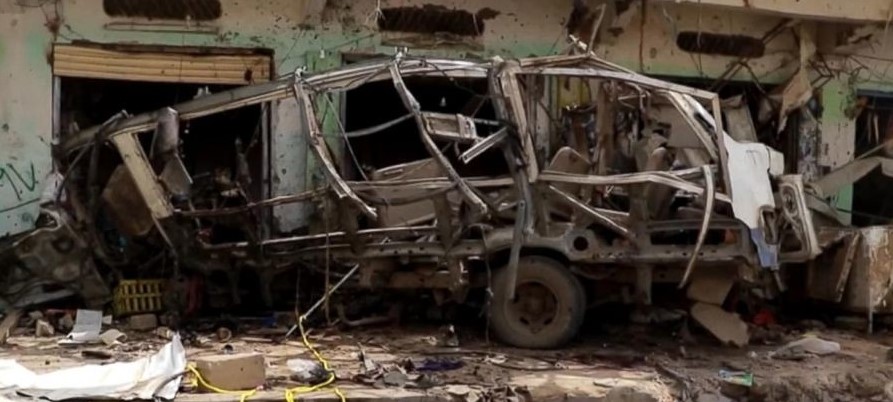
In 2018, a Saudi-led coalition airstrike struck a school bus, killing dozens of children. The incident raised serious questions about the conduct of hostilities and the responsibilities of states supplying weapons used in such operations.
In Ukraine, Russian strikes on civilian infrastructure—including healthcare facilities—have been widely documented. In Syria, repeated attacks on hospitals and civilian areas have been reported over the course of the conflict. Across these contexts, a consistent pattern emerges: denial of responsibility, despite substantial evidence.
A Culture of Impunity
The erosion of compliance with International Humanitarian Law is not solely a legal issue—it is a structural one. Where there are no meaningful consequences, violations persist.
Attacks on humanitarian workers are enabled by a broader culture of impunity. Without enforcement mechanisms that carry real weight, legal protections remain aspirational rather than operational.
What Is at Stake
Humanitarian workers operate in these environments because the need is immediate and overwhelming. They provide food, medical care, education, and protection in places where systems have collapsed.
They do so knowing the risks. But they are not—and should not be—targets.
Protecting civilians and those who serve them requires more than legal frameworks. It requires sustained commitment, accountability, and the political will to enforce the rules that already exist.
Without that, the gap between law and reality will continue to widen—and the consequences will continue to be measured in lives.
Published 12 July 2022
Photo Credit: ‘713 School Bus Bombing’ by Felton Davis – Saudi-led Coalition Airstrike Kills Dozens of Children on Bus in Yemen.
About Thinking Out Loud
Thinking Out Loud is a commentary series by Lara Kajs examining international law, humanitarian crises, and the prevention of mass atrocities. Drawing on field experience in conflict and displacement settings, the column explores the legal and policy challenges that shape contemporary conflicts
About the Author
Lara Kajs is the founder and executive director of The Genocide Report, a Washington, DC-based educational nonprofit focused on atrocity prevention and international law. She is the author of several field-based books on conflict, displacement, humanitarian crises, and international humanitarian law, drawing on extensive research and field experience in Yemen, Syria, and Afghanistan. Her writing and public speaking focus on atrocity crimes, forced displacement, the protection of civilians, and the legal frameworks governing armed conflict.