Lara Kajs
Thinking Out Loud
The humanitarian crisis unfolding across Cuba cannot be understood solely through the lens of domestic governance failure or economic mismanagement. It is also inseparable from a decades-long system of external economic pressure that has increasingly targeted the country’s energy access, financial systems, trade capacity, and international economic relationships. What began during the Cold War as a strategy of containment has evolved into one of the most enduring sanctions regimes in modern history, with profound consequences for civilian life on the island.
Today, Cuba faces widespread blackouts, collapsing infrastructure, severe shortages of food and medicine, and one of the largest migration waves in its modern history. While the Cuban government bears responsibility for internal political repression, economic centralization, and systemic inefficiencies, the broader humanitarian crisis has also been shaped by external policies explicitly designed to weaken the Cuban state through sustained economic deprivation.
The deeper issue is not whether sanctions create pressure. They clearly do. The question is whether policies built on economic coercion can remain morally and strategically justified when civilian populations absorb the overwhelming burden of the consequences over generations.
The Long Shadow of 1959
The modern U.S.-Cuba relationship remains heavily shaped by the political rupture that followed Fidel Castro’s 1959 revolution and the collapse of the U.S.-backed Batista government. After Castro nationalized major industries and expropriated American-owned assets, Washington responded with escalating economic restrictions that eventually evolved into a comprehensive embargo formalized in 1962.
From the outset, the objective extended beyond diplomatic disagreement alone. A 1960 U.S. State Department memorandum outlined a strategy aimed at weakening Cuba economically by restricting access to money and supplies in order to generate “hunger, desperation, overthrow of government.” The language remains striking not only for its bluntness but because it established the logic that would shape decades of American policy toward Cuba.
As relations deteriorated, Cuba aligned itself more closely with the Soviet Union, both economically and militarily. For Havana, the partnership provided a survival mechanism against growing U.S. isolation. For Washington, it reinforced the perception of Cuba as a strategic Cold War threat operating within the Western Hemisphere.
Yet while the Soviet Union collapsed more than three decades ago, much of the underlying pressure architecture directed at Cuba remained intact.
Over time, sanctions expanded beyond bilateral trade restrictions into a broader system affecting banking access, shipping, investment, fuel procurement, and international finance. Laws such as the Helms-Burton Act extended the reach of U.S. penalties beyond American territory by threatening consequences for foreign companies and governments conducting business with Cuba. The result has been a form of economic isolation that extends far beyond direct U.S.-Cuban relations alone.
The Cold War ended. The embargo did not.
From Isolation to Economic Strangulation
The current humanitarian crisis in Cuba reflects more than economic stagnation. It reflects the cumulative effects of prolonged structural pressure operating alongside internal governance failures and repeated external shocks.
In recent years, the United States has intensified sanctions targeting Cuba’s access to fuel, foreign currency, and international financial systems. Secondary sanctions and restrictions connected to oil shipments have sharply reduced the island’s energy supply, contributing to recurring electrical grid failures and widespread blackouts lasting for nearly 20 hours per day, or even days across parts of the country.
These measures have consequences that extend well beyond macroeconomics.
Electricity shortages simultaneously disrupt refrigeration, water pumping systems, sanitation services, transportation networks, hospitals, and food distribution. Fuel shortages affect agricultural production and the ability to transport goods across the island. Banking restrictions complicate the importation of medicine, medical equipment, and basic industrial supplies.
Modern sanctions regimes rarely resemble conventional warfare, yet their effects on civilian systems can become similarly pervasive over time. In Cuba, restrictions targeting energy access, trade, finance, and international transactions increasingly shape the daily realities of civilian survival.
The humanitarian consequences are visible across nearly every major sector.
Hospitals face shortages of antibiotics, pain medication, surgical supplies, and spare parts for medical equipment. Blackouts complicate emergency medical care and refrigeration of pharmaceuticals. Food shortages have intensified alongside inflation and declining purchasing power, leaving many households dependent on ration systems, remittances, or informal survival economies.
The crisis has also accelerated migration on a massive scale. Hundreds of thousands of Cubans have left the island in recent years, including healthcare professionals and younger working-age populations. The resulting demographic pressure has further strained public services and weakened institutional resilience.
These conditions are not solely the result of sanctions. Cuba’s government has long struggled with inefficiency, centralized economic control, corruption, and restrictions that have constrained domestic productivity and private-sector growth. But external pressure has significantly compounded the crisis by restricting the country’s ability to stabilize core civilian infrastructure during periods of economic collapse.
The distinction matters because humanitarian deterioration rarely emerges from a single cause alone. It develops through the interaction of political decisions, economic fragility, infrastructure decline, and external pressure over time.
Obama’s Opening and the Return of Maximum Pressure
For a brief period, U.S.-Cuba relations appeared to move in a different direction.
Between 2014 and 2016, the Obama administration pursued normalization efforts aimed at restoring diplomatic relations and easing aspects of the embargo through executive action. Restrictions on travel, remittances, banking, and telecommunications were partially relaxed. Scientific and medical cooperation expanded, and broader engagement was framed as an alternative to decades of isolation that had failed to produce political transformation inside Cuba.
The strategy did not attempt to legitimize Cuba’s political system. Rather, it reflected a different theory of change: that engagement, economic interaction, and expanded people-to-people contact might gradually open political and economic space within Cuban society more effectively than permanent isolation.
That approach proved politically fragile.
The Trump administration reversed many of the normalization measures and reinstated a “maximum pressure” strategy heavily influenced by anti-communist hardliners within the administration, including Secretary of State Marco Rubio. Restrictions on travel and financial transactions were tightened, sanctions expanded, and Cuba was redesignated as a State Sponsor of Terrorism.
The redesignation carried consequences extending far beyond symbolism. It significantly complicated Cuba’s access to international banking systems and financial transactions, further deepening the island’s economic isolation.
The current escalation reflects a continuation rather than a departure from that strategy. Increased pressure on fuel shipments, expanded sanctions enforcement, and broader efforts to isolate the Cuban economy reflect an underlying assumption that sustained economic pain can still generate political collapse or regime transition.
The broader regional pattern and U.S. desire for regime change are difficult to ignore.
In Venezuela, U.S. policy similarly combined sanctions, diplomatic isolation, and explicit support for political transition. U.S. action resulted in the arrest and extradition of Venezuelan President Nicolás Maduro. In Iran, economic pressure has likewise remained central to broader confrontation strategies. An aggressive U.S. aerial bombardment was responsible for the death of Iran’s Supreme Leader Ayatollah Ali Khamenei. His son, Ayatollah Mojtaba Khamenei, is the new Supreme Leader. In Cuba, the underlying logic increasingly reflects the same belief: that coercive economic pressure can achieve political outcomes that decades of isolation have thus far failed to produce.
The Humanitarian Cost of Regime Change
Economic coercion is often discussed in strategic or geopolitical terms, but its consequences are ultimately absorbed by civilian populations rather than political elites.
This reality creates one of the central ethical tensions surrounding long-term sanctions regimes.
Supporters of the embargo argue that pressure remains necessary because the Cuban government continues to restrict political freedoms, suppress dissent, and maintain authoritarian control. Critics counter that policies designed to weaken the state economically have instead contributed to widespread civilian suffering while failing to achieve their stated political objectives.
Both realities can exist simultaneously.
The Cuban government’s internal failures are real. So too are the humanitarian consequences of external pressure deliberately designed to intensify economic hardship.
International humanitarian organizations and United Nations experts have increasingly warned that the current crisis disproportionately affects vulnerable populations, including older adults, pregnant women, children, and households without access to remittances or support networks abroad. Shortages of food, medicine, electricity, and clean water create conditions in which vulnerability becomes cumulative and self-reinforcing.
The ethical challenge is therefore not simply whether sanctions are legal under international law. It is whether prolonged civilian deprivation remains morally defensible when it becomes normalized as an instrument of political leverage.
The question is no longer whether sanctions create pressure. The question is whether generations of civilian suffering can remain an acceptable price for political objectives that remain unresolved after more than sixty years.”
The Bottom Line: When Pressure Becomes Permanent
The humanitarian crisis in Cuba is the product of both internal governance failures and an external pressure campaign explicitly designed to weaken the country economically over time.
That distinction matters because discussions surrounding Cuba often collapse into false binaries in which responsibility must belong entirely to one side or the other. In reality, prolonged crises are frequently shaped by overlapping systems of political failure, economic fragility, and coercive external policy operating simultaneously.
Yet one reality remains increasingly difficult to ignore.
Fidel Castro is gone. The Soviet Union is gone. The Cold War is over. But the architecture of economic deprivation surrounding Cuba remains firmly intact.
The central question facing the international community is therefore not whether sanctions can impose pressure. They clearly can. The deeper question is whether policies originally designed as temporary instruments of coercion become something fundamentally different when they persist across generations without resolving the underlying political conflict.
At what point does pressure cease to function as leverage and instead become structural punishment absorbed primarily by civilians?
That question extends beyond Cuba alone. It speaks to a broader challenge surrounding the modern use of sanctions, economic warfare, and regime-change strategies in international politics. When civilian suffering becomes prolonged, normalized, and politically routinized, the distinction between strategic pressure and collective punishment becomes increasingly difficult to separate.
Published: 29 May 2026
Photo Credit
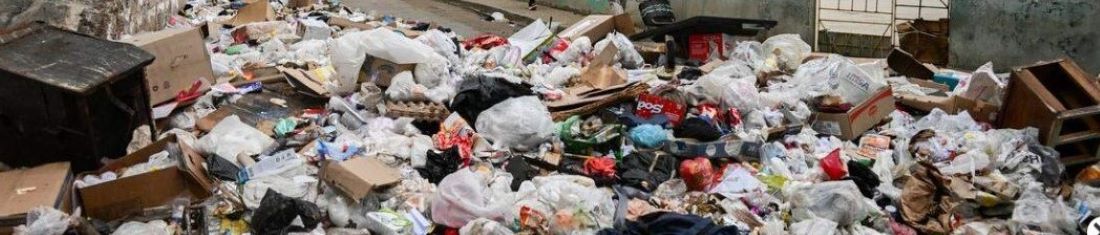
Havana’s sanitation and humanitarian crisis by C.Thornson, TGR. Licensed under CC BY-NC-ND 2.0
About Thinking Out Loud
Thinking Out Loud is a commentary series by Lara Kajs examining international law, humanitarian crises, and the prevention of mass atrocities. Drawing on field experience in conflict and displacement settings, the column explores the legal and policy challenges that shape contemporary conflicts.
About the Author
Lara Kajs is the founder and executive director of The Genocide Report, a Washington, DC-based educational nonprofit focused on atrocity prevention and international law. She is the author of several field-based books on conflict, displacement, humanitarian crises, and international humanitarian law, drawing on extensive research and field experience in Yemen, Syria, and Afghanistan. Her writing and public speaking focus on atrocity crimes, forced displacement, the protection of civilians, and the legal frameworks governing armed conflict.