Lara Kajs
Thinking Out Loud
This piece examines the persistent risks faced by journalists and humanitarian workers in conflict zones, highlighting how violations of International Humanitarian Law continue despite legal protections. Drawing on historical and recent examples from Syria, Yemen, and the West Bank, it underscores the importance of accountability for attacks on media professionals, the moral and legal obligations of states, and the broader implications for press freedom and civilian protection in armed conflicts.
International Humanitarian Law (IHL) is designed to limit human suffering during armed conflict, including the protection of civilians and individuals no longer participating in hostilities. Among those explicitly protected are journalists and humanitarian workers. Intentionally targeting them constitutes a violation of IHL and may amount to a war crime. Despite these protections, journalists continue to be threatened, harmed, and killed in conflict zones—often with little accountability.
Targeting The Press
In 2012, journalist Marie Colvin and photojournalist Rémi Ochlik were killed while covering the siege of Homs in Syria. Subsequent findings indicated that Syrian government forces had tracked their location through electronic signals and deliberately targeted their position.
Such methods are not isolated. Similar tracking tactics have been reported in other conflict environments, raising broader concerns about the deliberate targeting of journalists and humanitarian personnel.
Legal Protections and Their Limits
In response to growing threats against journalists, the United Nations Security Council adopted Resolution 1738, condemning attacks against journalists, media professionals, and associated personnel in conflict situations. The resolution calls on states to prevent violence against journalists, thoroughly investigate any violations, and prosecute those responsible. It also affirms that deliberate attacks against civilians and protected persons—including journalists—may constitute war crimes and pose a threat to international peace and security. Yet, despite these legal frameworks, violations continue to occur.
ISIS and Accountability
In 2014, journalists, including James Foley and Steven Sotloff, along with humanitarian workers, were abducted and executed by ISIS in Syria. These killings, widely publicized, underscored both the brutality of the group and the vulnerability of journalists in conflict zones.
In this instance, some degree of accountability has been achieved. Individuals involved in these crimes have been prosecuted, including El Shafee Elsheikh, who was convicted in a U.S. federal court and sentenced to life in prison in 2022.
Similarly, in 2019, a U.S. court held the Syrian government liable for the targeted killing of Marie Colvin, concluding that she had been deliberately silenced because of her reporting.
These cases demonstrate that accountability is possible—but inconsistent.
The Case of Shireen Abu Akleh
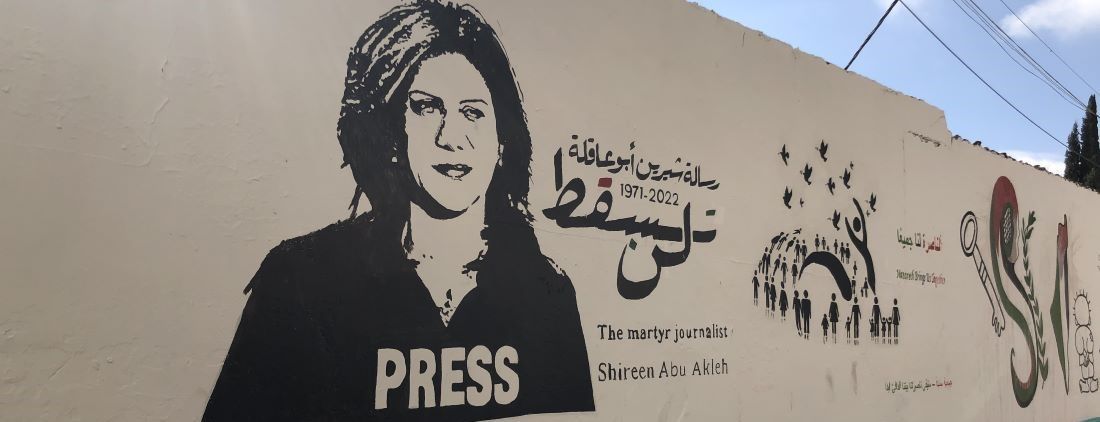
In May 2022, veteran journalist Shireen Abu Akleh was killed while reporting in the West Bank. She was wearing clearly marked press identification at the time.
Investigations by multiple organizations, including media outlets and human rights groups, concluded that she was likely shot by Israeli forces. Israel Defense Forces initially denied responsibility, later acknowledging the possibility that she may have been killed by unintentional fire.
Israel has rejected allegations of deliberate targeting and has declined external investigations.
The case raises complex legal and political questions, but the core issue remains: when a protected individual is killed in a conflict setting, there must be a credible, transparent process to determine accountability.
As a U.S. citizen, Abu Akleh’s death also falls within the scope of U.S. law, including the War Crimes Act, as well as protections outlined in the Geneva Conventions and their Additional Protocols.
Accountability in conflict is not optional; it is essential to the rule of law.”
Accountability and the Rule of Law
The protection of journalists is not symbolic—it is foundational to transparency in conflict. When journalists are targeted, the flow of information is disrupted, and the ability to document violations is diminished.
Legal frameworks exist. Mechanisms for accountability exist. What remains inconsistent is enforcement. At a time when journalists are increasingly at risk, upholding International Humanitarian Law requires more than condemnation. It requires credible investigations, legal consequences, and sustained international pressure.
Without accountability, the protections afforded under IHL lose their meaning.
Published: 15 November 2022
Photo Credit
Graffiti of Shireen Abu Akleh in Nazareth, 8 Nov 2022, by Davide Mauro. Licensed under CC BY-SA 4.0
About Thinking Out Loud
Thinking Out Loud is a commentary series by Lara Kajs examining international law, humanitarian crises, and the prevention of mass atrocities. Drawing on field experience in conflict and displacement settings, the column explores the legal and policy challenges that shape contemporary conflicts.
About the Author
Lara Kajs is the founder and executive director of The Genocide Report, a Washington, DC-based educational nonprofit focused on atrocity prevention and international law. She is the author of several field-based books on conflict, displacement, humanitarian crises, and international humanitarian law, drawing on extensive research and field experience in Yemen, Syria, and Afghanistan. Her writing and public speaking focus on atrocity crimes, forced displacement, the protection of civilians, and the legal frameworks governing armed conflict.