By Lara Kajs
Thinking Out Loud
Israel has faced an unprecedented political and legal confrontation in recent years as Prime Minister Benjamin Netanyahu stands trial on corruption charges while continuing to lead the country. The overlap between Netanyahu’s legal troubles and his political decisions has raised profound questions about democratic governance, judicial independence, and the stability of Israel’s political institutions.
Israeli Prime Minister Benjamin Netanyahu, the country’s longest-serving leader, has spent years navigating a convergence of legal scrutiny and political survival. Facing charges of bribery, fraud, and breach of trust, Netanyahu remains at the center of a historic legal battle that has reshaped Israel’s domestic politics.
The central question confronting Israeli society is no longer simply whether the prime minister will ultimately be convicted. It is whether the political maneuvers surrounding his leadership are being driven by governance priorities or by the imperative to remain in power while under indictment.
The Legal Cases Against Netanyahu
Netanyahu currently faces three major criminal cases that have dominated Israeli political life since the late 2010s.
Case 1000 alleges that Netanyahu and his wife received luxury gifts—including champagne and cigars—from wealthy benefactors in exchange for political favors.
Case 2000 centers on accusations that Netanyahu attempted to negotiate favorable coverage with the publisher of the newspaper Yedioth Ahronoth in exchange for regulatory actions that could weaken a rival publication.
Case 4000, widely viewed as the most serious, alleges that Netanyahu granted regulatory benefits to the telecommunications company Bezeq in exchange for favorable coverage from its news site, Walla!.
Netanyahu has consistently denied all charges, describing the investigations as a politically motivated campaign orchestrated by media elites, political rivals, and an overreaching judiciary. His trials remain ongoing, but the cases have already reshaped Israel’s political landscape.
Political Power as Legal Insulation
Since his indictment in 2019, Netanyahu’s political strategy has increasingly focused on retaining power within Israel’s parliamentary system. Unlike cabinet ministers, Israeli law does not require a sitting prime minister to resign while under indictment.
This distinction has significant implications. Remaining in office allows a prime minister to retain political influence over legislative agendas, judicial appointments, and coalition negotiations. Critics argue that this structural reality has created incentives for Netanyahu to prioritize political survival.
Repeated election cycles, fragile coalition negotiations, and shifting alliances have marked Israeli politics in recent years. For some observers, these developments reflect ordinary political contestation. For others, they underscore how Netanyahu’s legal situation has become intertwined with the country’s governance.
Judicial Reform and the Constitutional Crisis
The tensions reached a peak in 2023 when Netanyahu’s government proposed sweeping judicial reforms that would have significantly curtailed the powers of Israel’s Supreme Court and increased political control over judicial appointments.
Supporters of the reforms argued that the changes were necessary to restore democratic balance between elected officials and the judiciary. Critics, however, viewed the overhaul as a direct threat to judicial independence and an attempt to weaken institutions involved in Netanyahu’s prosecution.
The proposals triggered one of the largest protest movements in Israeli history. Millions of Israelis participated in demonstrations across the country, warning that the reforms could fundamentally alter the balance of power within the Israeli state.
Although Netanyahu ultimately paused portions of the reform agenda, the episode exposed deep divisions within Israeli society and raised broader questions about constitutional stability.
When legal accountability and political survival collide, the resilience of democratic institutions is put to its most serious test.”
War, Politics, and the Gaza Conflict
Israel’s ongoing war in Gaza has further complicated the political landscape surrounding Netanyahu’s leadership.
During wartime, political leaders often benefit from a “rally-around-the-flag” effect, as national security concerns dominate public discourse. The conflict has also affected the practical timeline of Netanyahu’s trial, with legal proceedings delayed as the country focuses on wartime priorities.
Analysts caution against attributing the war solely to Netanyahu’s personal political interests. Strategic considerations, coalition dynamics, military planning, and regional pressures all play major roles in shaping Israel’s decisions.
Nevertheless, the overlap between wartime leadership and Netanyahu’s legal situation has intensified debate over whether political survival and national policy have become intertwined.
Netanyahu has also maintained close relationships with key international political figures, including former U.S. president Donald Trump, whose support has influenced political discourse surrounding Israel’s leadership and legal controversies.
A Democracy at a Crossroads
Netanyahu’s legal battles have produced a profound dilemma for Israeli democracy.
For supporters, the charges represent an example of judicial overreach targeting a democratically elected leader. For critics, the situation reflects a dangerous erosion of democratic norms, in which political authority is used to challenge institutional accountability.
At stake is not only Netanyahu’s political future but also broader questions about the relationship between law and power in democratic systems. Can a leader facing criminal charges continue to govern without undermining public confidence in the rule of law? And how should democratic institutions respond when legal accountability collides with political authority?
As Israel confronts both internal divisions and external security threats, its prime minister remains at the center of one of the most consequential political and legal confrontations in the country’s history.
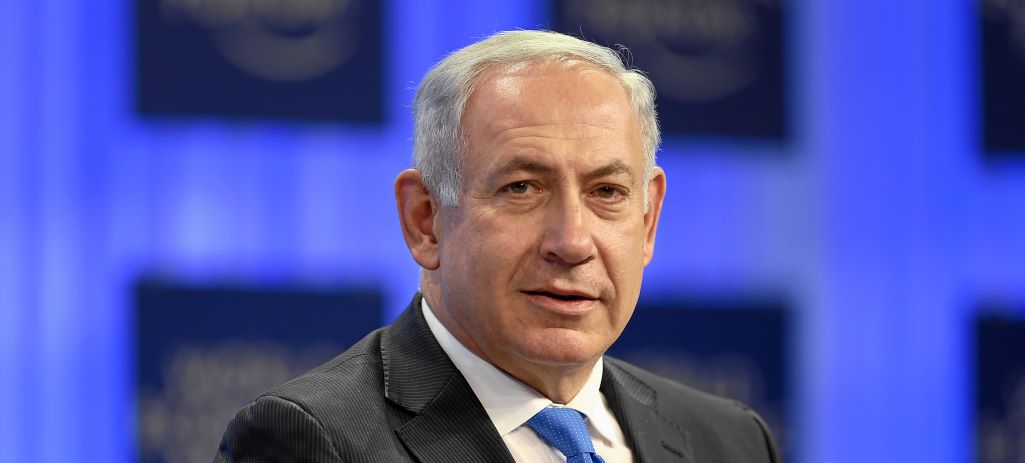
Photo credit: Israel’s Economic and Political Outlook: Benjamin Netanyahu, Espen Barth Eide, by World Economic Forum. Licensed under CC BY NC SA 2.0
Published 23 October 2025
About Thinking Out Loud
Thinking Out Loud is a commentary series by Lara Kajs examining international law, humanitarian crises, and the prevention of mass atrocities. Drawing on field experience in conflict and displacement settings, the column explores the legal and policy challenges that shape contemporary conflicts
Lara Kajs is the founder and executive director of The Genocide Report, a Washington, DC-based educational nonprofit focused on atrocity prevention and international law. She is the author of several field-based books on conflict, displacement, humanitarian crises, and international humanitarian law, drawing on extensive research and field experience in Yemen, Syria, and Afghanistan. Her writing and public speaking focus on atrocity crimes, forced displacement, the protection of civilians, and the legal frameworks governing armed conflict.