
By Lara Kajs
Thinking Out Loud
In democratic societies, the use of military force against a country’s own population is among the most sensitive exercises of state power. The United States has long maintained strict legal and institutional barriers separating the military from domestic law enforcement. These safeguards—rooted in constitutional principles, federal law, and historical precedent—exist to protect civilian governance and prevent the normalization of military authority in civilian life.
The United States maintains one of the world’s most powerful militaries, but its use within the country’s own borders is deliberately constrained. While the president serves as Commander in Chief of the Armed Forces, that authority does not translate into unlimited power to deploy military forces domestically.
American law and political tradition reflect a deep caution about using soldiers as a domestic policing force. Constitutional protections, federal statutes, and long-standing civil-military norms all serve to limit the circumstances under which federal troops can be used inside the United States.
These limits are not accidental. They reflect a historical understanding that democracy depends on maintaining a clear boundary between military force and civilian governance.
The Posse Comitatus Act
One of the most significant legal safeguards is the Posse Comitatus Act of 1878. The law restricts the federal government from using the Army or Air Force to enforce domestic laws unless specifically authorized by the Constitution or by Congress.
Although the statute does not explicitly reference the Navy or Marine Corps, Department of Defense regulations extend similar restrictions to all branches of the military. The National Guard, when operating under the authority of state governors, is exempt from these limitations and can perform law-enforcement duties during emergencies.
The law emerged after the Civil War during the Reconstruction period, when federal troops were used extensively in the southern states to enforce federal policies. By the late nineteenth century, lawmakers sought to prevent the federal government from relying on military force as a routine instrument of domestic governance.
The result was a legal framework designed to ensure that civilian law enforcement—not the military—remains responsible for maintaining public order.
The Insurrection Act: A Limited Exception
The primary statutory exception to these restrictions is the Insurrection Act of 1807. The law permits the president to deploy federal troops domestically in limited circumstances, including to suppress insurrection, enforce federal law, or protect civil rights when state authorities are unable or unwilling to do so.
However, the threshold for invoking the Insurrection Act is intentionally high. Historically, presidents have relied on it sparingly and often only after state authorities requested federal assistance.
In most situations involving unrest, natural disasters, or emergencies, governors deploy their state National Guard forces rather than relying on active-duty federal troops. Federalizing those forces or deploying active-duty military personnel without the cooperation of state authorities remains controversial and politically sensitive.
These limitations reflect a broader concern: using the military as a domestic policing force risks blurring the line between democratic governance and coercive state power.
Historical Precedent
The primary statutory exception to these restrictions is the Insurrection Act of 1807. The law permits the president to deploy federal troops domestically in limited circumstances, including to suppress insurrection, enforce federal law, or protect civil rights when state authorities are unable or unwilling to do so.
However, the threshold for invoking the Insurrection Act is intentionally high. Historically, presidents have relied on it sparingly and often only after state authorities requested federal assistance.
In most situations involving unrest, natural disasters, or emergencies, governors deploy their state National Guard forces rather than relying on active-duty federal troops. Federalizing those forces or deploying active-duty military personnel without the cooperation of state authorities remains controversial and politically sensitive.
These limitations reflect a broader concern: using the military as a domestic policing force risks blurring the line between democratic governance and coercive state power.
Civil–Military Norms
Beyond formal legal restrictions, the United States has developed strong institutional norms that discourage the military from becoming involved in domestic political conflicts.
American military leaders are trained to respect the boundary between military operations and civilian governance. The principle of civilian control of the military is paired with an expectation that the armed forces will remain politically neutral and avoid involvement in internal political disputes.
This professional culture has helped preserve public trust in the military while reinforcing the idea that domestic law enforcement should remain the responsibility of civilian authorities.
Why the Distinction Matters
Military forces are trained for combat operations, not civilian policing. Their training, rules of engagement, and operational structure are designed for battlefield environments rather than the complexities of civilian protest, civil unrest, or routine law enforcement.
Deploying soldiers in civilian settings risks escalating tensions and undermining public trust in government institutions. For that reason, democratic societies generally treat domestic military deployment as an extraordinary measure reserved for extreme circumstances.
The legal barriers surrounding domestic military deployment reflect a broader principle: in a functioning democracy, the rule of law—not the threat of force—should govern the relationship between the state and its citizens.
In democratic societies, the military defends the state from external threats—not the population it serves.”
The Bottom Line
The president’s role as Commander in Chief does not grant unrestricted authority to deploy the military within the United States. Constitutional protections, statutory limitations, and longstanding democratic norms all work together to ensure that the armed forces do not become instruments of routine domestic governance.
These safeguards are central to the American constitutional system. They exist to preserve civilian authority, protect individual liberties, and ensure that military power remains directed outward in defense of the nation—not inward against its people.
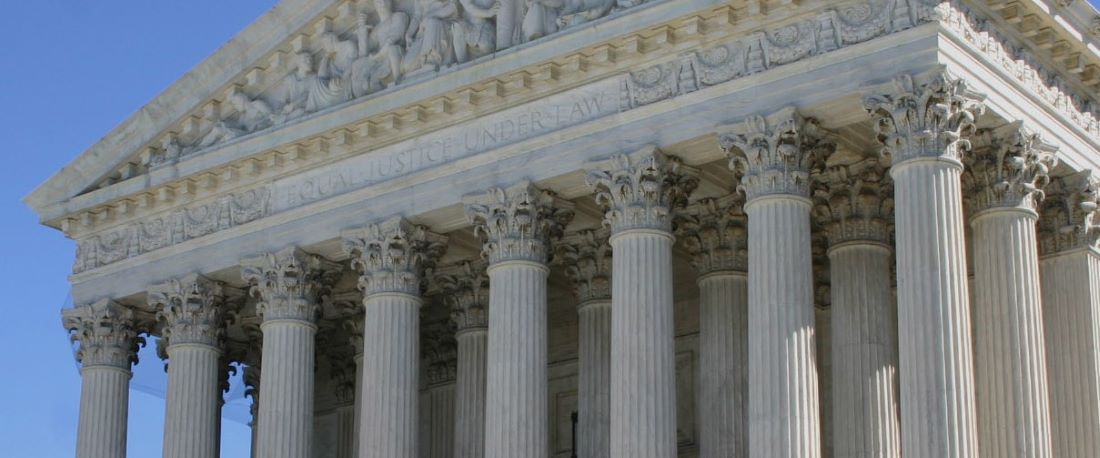
Photo Credit: US Supreme Court by dbking. Licensed under CC BY 2.0
Published 12 June 2025
About Thinking Out Loud
Thinking Out Loud is a commentary series by Lara Kajs examining international law, humanitarian crises, and the prevention of mass atrocities. Drawing on field experience in conflict and displacement settings, the column explores the legal and policy challenges that shape contemporary conflicts
Lara Kajs is the founder and executive director of The Genocide Report, a Washington, DC-based educational nonprofit focused on atrocity prevention and international law. She is the author of several field-based books on conflict, displacement, humanitarian crises, and international humanitarian law, drawing on extensive research and field experience in Yemen, Syria, and Afghanistan. Her writing and public speaking focus on atrocity crimes, forced displacement, the protection of civilians, and the legal frameworks governing armed conflict.