By Lara Kajs
Thinking Out Loud
In recent years, the United States has witnessed a troubling rise in political polarization, extremist rhetoric, and hate-driven violence. From incendiary social media campaigns to public demonstrations and political events, this growing climate of hostility threatens democratic norms, social cohesion, and the safety of marginalized communities. This piece examines how words, political discourse, and leadership influence the trajectory of intolerance in contemporary America.
The Rising Tide of Political Intolerance
Political discourse in America has grown increasingly toxic. Opponents are not merely disagreed with—they are demonized. Leaders and media often portray the other side as “evil” or an “enemy,” eroding shared humanity. One side insists the nation is at war. I’ve seen war, and this is not that—but the psychological barriers to violence are dangerously lowered when society normalizes demonization.
Public conversations frequently devolve into shouting matches. Language such as “We’re taking our country back” frames political conflict as a zero-sum battle, implying that only one group’s rights or existence is tolerated.
From Words to Action: How Rhetoric Spurs Violence
Unchecked hate speech has real-world consequences. It fosters environments of fear, exclusion, and social polarization. Marginalized communities are particularly vulnerable, facing harassment, intimidation, or worse. As rhetoric escalates, the line between disagreement and violent action blurs, creating fertile ground for extremist behavior, mass shootings, and organized hate campaigns.
Social Media Amplification
Social media platforms, while powerful tools for free expression, often act as echo chambers that amplify misinformation, conspiracy theories, and hate speech. Algorithms reward outrage, intensifying divisions and emboldening extremist actors. The normalization of incendiary rhetoric online fuels offline violence, from organized rallies to political attacks on individuals and institutions.
Tolerance as a Democratic Necessity
Tolerance is not agreement or abandoning principles. It is the ability to coexist peacefully despite profound differences. In a diverse nation, tolerance ensures that political, religious, racial, and cultural diversity can thrive without fear of exclusion or harm. Democracy relies on this principle; without it, civic participation and institutional legitimacy erode.
Freedom of Speech vs. Incitement
Freedom of speech is not absolute. Expressions that incite violence, discrimination, or undermine democratic norms have consequences. Healthy debate is vital—but speech that encourages harm or dehumanization threatens the safety of communities and the stability of society. Drawing these lines clearly is essential to protect both individual rights and public welfare.
Leadership and Accountability
Leaders—political, social, and cultural—bear heightened responsibility for the tone of public discourse. Their words can inspire, mobilize, and educate, or they can inflame divisions and justify harm. Silence in the face of hate is complicity. Citizens also play a role: accountability requires active engagement, critique, and advocacy for respectful, inclusive discourse.
Words Matter: History, Power, and Consequences
Words carry power. They can inspire revolutions, build bridges, and bring comfort, as seen in Martin Luther King Jr.’s “I Have a Dream” speech or Malala Yousafzai’s advocacy for girls’ education. Yet history is also filled with examples of words used to manipulate, dehumanize, and incite violence.
Language shapes narratives, colors public perception, and reinforces social hierarchies. Calling a protest a “riot” versus a “demonstration” or labeling people “illegal” versus “undocumented” significantly impacts societal understanding and legal consequences. Leaders and influencers set the tone—reckless rhetoric spreads quickly and can have long-lasting effects.
Words matter, and they come with consequences. Reckless rhetoric can erode democracy, normalize hatred, and fuel real-world violence.”
The Path Forward
Addressing the climate of hate requires uncomfortable conversations, honest self-reflection, and active civic engagement. It is not enough to condemn violence after the fact; society must challenge dehumanizing language, demand accountability from leaders, and encourage empathy and understanding.
While America does not face civil war, the nation is at a crossroads: continued inflammatory rhetoric and tribal hostility will only amplify the risk of political violence. Preserving democracy requires lowering the temperature on hate, reinforcing tolerance, and prioritizing civil discourse.
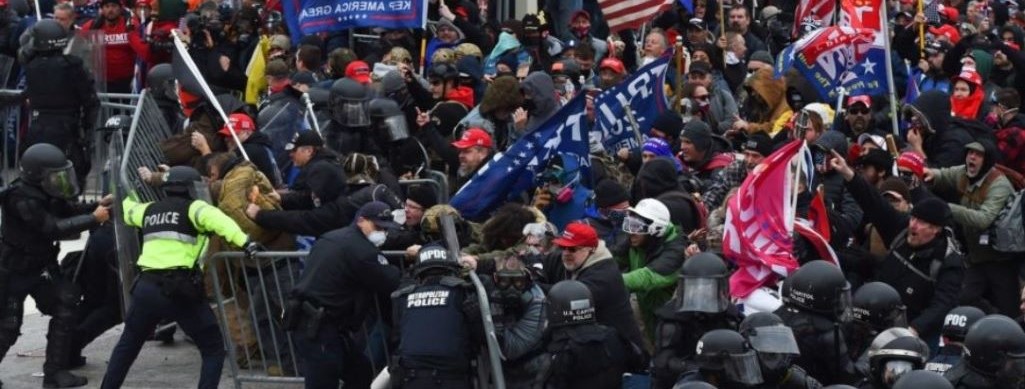
Photo credit: Jan 6, 2021, insurrection by Trump supporters at the US Capitol, Washington, DC. (LK)
Published 15 September 2025
About Thinking Out Loud
Thinking Out Loud is a commentary series by Lara Kajs examining international law, humanitarian crises, and the prevention of mass atrocities. Drawing on field experience in conflict and displacement settings, the column explores the legal and policy challenges that shape contemporary conflicts
Lara Kajs is the founder and executive director of The Genocide Report, a Washington, DC-based educational nonprofit focused on atrocity prevention and international law. She is the author of several field-based books on conflict, displacement, humanitarian crises, and international humanitarian law, drawing on extensive research and field experience in Yemen, Syria, and Afghanistan. Her writing and public speaking focus on atrocity crimes, forced displacement, the protection of civilians, and the legal frameworks governing armed conflict.