By Lara Kajs
Thinking Out Loud
As Israel and Hamas engage in high-stakes negotiations in Egypt, international attention has turned to a 20-point peace plan proposed by U.S. President Donald Trump. While the plan aims to halt the conflict in Gaza, it faces skepticism from Palestinian communities, human rights experts, and regional actors. The agreement’s structural ambiguities, asymmetric demands, and exclusion of Palestinians from key discussions raise serious questions about its viability and potential consequences for lasting peace.
Peace talks between Israel and Hamas are underway in Egypt to negotiate a 20-point Gaza peace plan intended to end the ongoing conflict. Proposed by U.S. President Donald Trump, the plan initially received backing from Israel (Netanyahu) and international actors, but reactions among Gazans, human rights experts, and regional stakeholders remain deeply skeptical.
The Terms of the Peace Plan
If implemented, the plan would halt fighting immediately and require the Israeli Defense Forces (IDF) to withdraw to predetermined lines. Hamas is tasked with releasing all hostages within 72 hours, disarming, deradicalizing, and refraining from participating in future governance.
Point 6 promises amnesty for Hamas members who commit to peaceful co-existence and safe passage for those leaving Gaza. Oversight is assigned to a “Board of Peace” chaired by Trump, with Tony Blair included—raising questions about legitimacy and neutrality.
Points 19 and 20 hint at eventual Palestinian Authority control, softly suggesting future statehood. However, the plan remains vague, with critical details about governance, security, and verification largely undefined.
Structural Weaknesses and Implementation Challenges
Several factors make successful implementation unlikely:
Ambiguity: Terms like “withdrawal” are undefined. Israel could interpret the borders or timing to preserve the status quo.
Asymmetry of obligations: Hamas faces strict deadlines for disarmament and compliance, while Israeli obligations lack comparable time-bound enforcement.
Internal politics: Netanyahu’s far-right coalition opposes ceasefires and any compromise with the Palestinian Authority, risking government instability if concessions are perceived as betrayal.
Trust deficit: Decades of conflict and broken agreements have eroded confidence between parties. Weak verification mechanisms increase the risk of collapse.
These weaknesses create leverage for Israel and the U.S. while constraining Hamas, raising the likelihood that early phases fail and the plan unravels.
Political Incentives and Hidden Agendas
President Trump publicly signaled that if Hamas rejects the plan, Israel would have the U.S.’s full backing—a blank check for continued military action in Gaza. Netanyahu has also suggested that Israel may not fully adhere to the plan, particularly regarding Palestinian statehood or complete withdrawal.
The exclusion of Palestinians from the negotiation process mirrors patterns seen in the Abraham Accords. By sidelining the affected population, the plan risks perpetuating occupation and failing to address the root causes of the conflict.
Voices from Gaza
Many Palestinians see the deal as a farce: structurally flawed, skewed toward Israel, and unlikely to survive.”
For Palestinians, the need for peace is urgent. Daily violence, mass starvation, destruction, and displacement continue to devastate Gaza. Yet many view this particular deal as a political farce: structurally flawed, heavily skewed toward Israel, and unlikely to survive. Sustainable peace requires an enforceable framework that prioritizes Palestinian self-determination and addresses long-standing injustices.
Published 9 October 2025
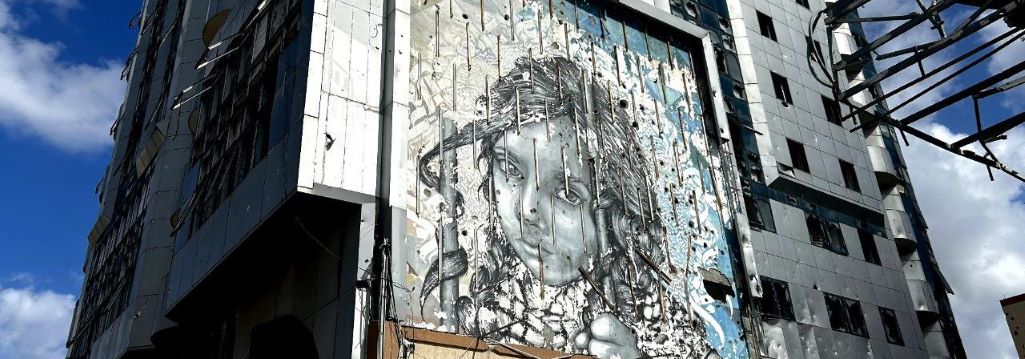
Photo Credit: Shattered Lives, the Aftermath of Gaza war 2023-2025 by Hla-bashbash. Licensed under CC BY SA 4.0
About Thinking Out Loud
Thinking Out Loud is a commentary series by Lara Kajs examining international law, humanitarian crises, and the prevention of mass atrocities. Drawing on field experience in conflict and displacement settings, the column explores the legal and policy challenges that shape contemporary conflicts
About the Author
Lara Kajs is the founder and executive director of The Genocide Report, a Washington, DC-based educational nonprofit focused on atrocity prevention and international law. She is the author of several field-based books on conflict, displacement, humanitarian crises, and international humanitarian law, drawing on extensive research and field experience in Yemen, Syria, and Afghanistan. Her writing and public speaking focus on atrocity crimes, forced displacement, the protection of civilians, and the legal frameworks governing armed conflict.